
We implement practical solutions from field research to community education to protect owls, restore habitats, and promote sustainable coexistence.
We conduct field surveys in forests and woodland habitats to understand owl populations and guide conservation planning.
This project focuses on conserving two of Tanzania’s rare and threatened forest owls: the Endangered Sokoke Scops Owl and the Usambara Eagle-Owl, within the Eastern Arc Mountains, a globally important biodiversity hotspot. Through scientific field surveys and long-term monitoring, the project generates critical data on population status, habitat use, and emerging threats.
Alongside research, we work closely with local communities to raise awareness, challenge harmful cultural beliefs, and promote stewardship of forest habitats. By combining science with community engagement and habitat restoration initiatives, the project aims to secure the future of these iconic species while supporting sustainable livelihoods. Continued conservation efforts will strengthen monitoring and protect these unique forests for generations to come.
Project Link 1: https://share.google/aZVMOc5XJoavh0HQk
Project Link 2: https://share.google/y3bLvFJ23nLm96qyd
Project Link 3: https://www.speciesconservation.org/small-grant/sokoke-scops-owl/36210
We work with communities to reduce harmful misconceptions while providing rescue and rehabilitation for injured or displaced owls.
We provide scientific evidence that supports stronger forest management and conservation policies for long-term owl protection.
Your support helps us expand research, strengthen education, and protect habitats for future generations
Tanzania is home to a remarkable diversity of owl species, each playing an important role in the ecosystems they inhabit.
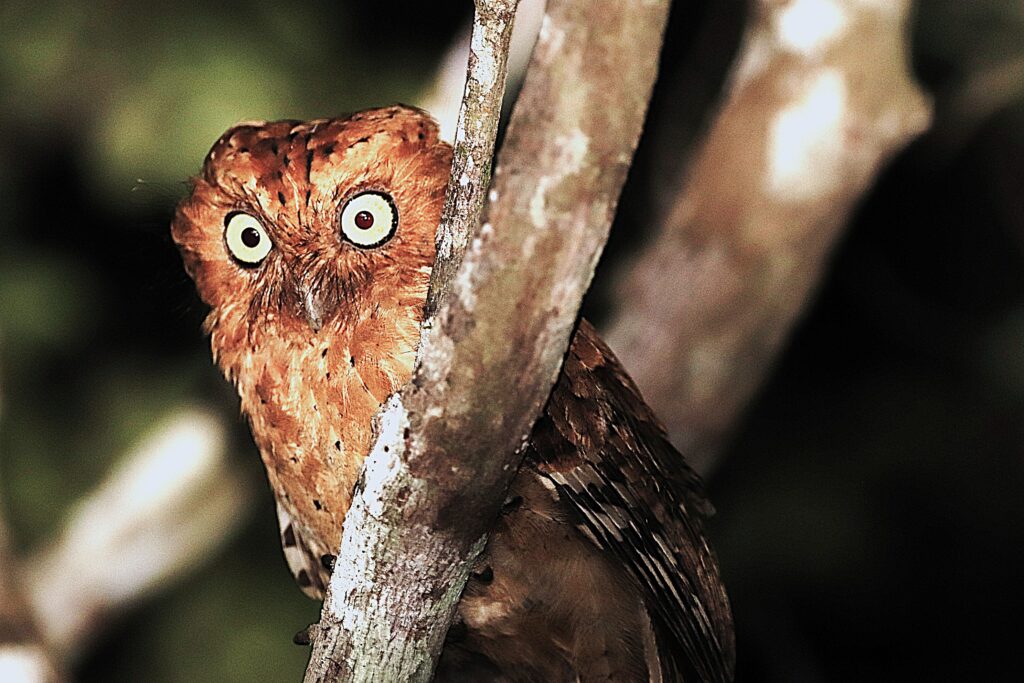
The Sokoke Scops Owl (Otus ireneae) is a small, forest-dependent owl found in coastal and lowland forests of East Africa. It is Endangered, mainly due to ongoing habitat loss and forest degradation.
This species prefers dense, undisturbed forest where it nests in tree cavities and relies on intact vegetation for survival.
Despite its small size, it plays an important role in controlling insect populations. Protecting its habitat is critical for preventing further population decline.
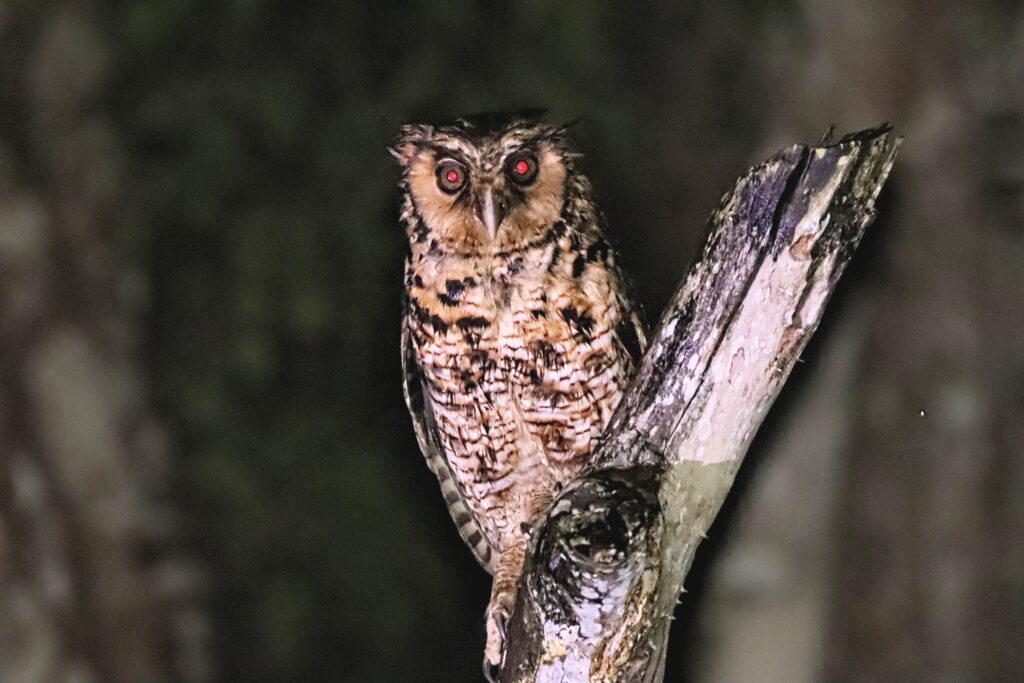
The Usambara Eagle-Owl (Bubo poensis vosseleri), a subspecies of Fraser’s Eagle-Owl, is a medium-to-large forest owl found mainly in the Usambara Mountains. It prefers montane forests but can also occur in less-disturbed lowland forests.
Its deep, low-pitched calls often frighten local residents, contributing to negative perceptions. Although not currently classified as endangered, it faces threats from habitat disturbance and human persecution driven by fear and misunderstanding.
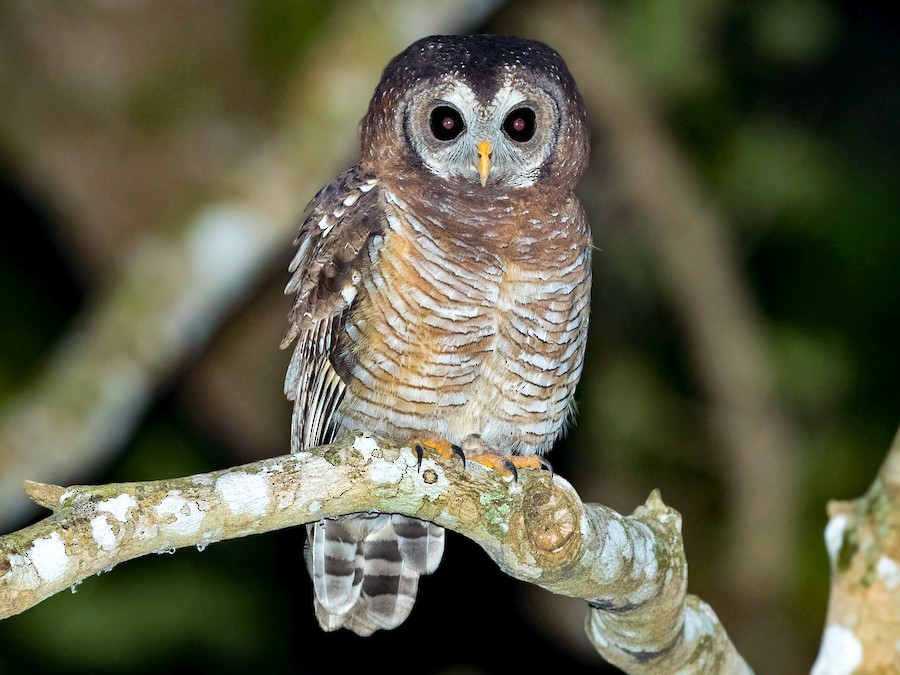
The African Wood-Owl (Strix woodfordii) is a medium-sized owl commonly found in forests and wooded habitats. It is not globally threatened, but it is one of the most feared owls in Tanzania due to strong cultural beliefs.
Its loud calls: “hu-wuuu” (males) and “hu-ho-hu-ho-hu-ho” (females), are often associated with death or misfortune. Despite these beliefs, it is a harmless and beneficial species that helps control rodents and insects.
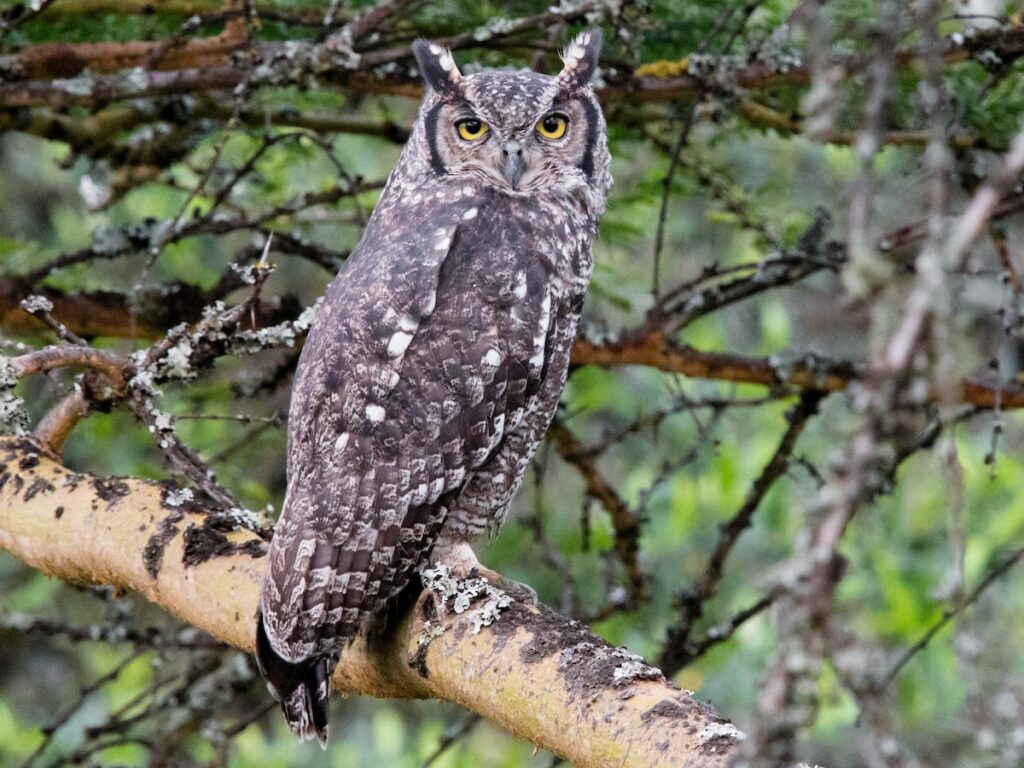
The Spotted Eagle-Owl (Bubo africanus) is a large, adaptable owl found in a wide range of habitats, including cliffs, open woodlands, and even abandoned buildings. It is not threatened and is relatively common.
Its soft booming call and striking appearance, featuring orange eyes and prominent ear tufts, often lead to fear and superstition. However, it plays an important ecological role as a predator of rodents and small animals.
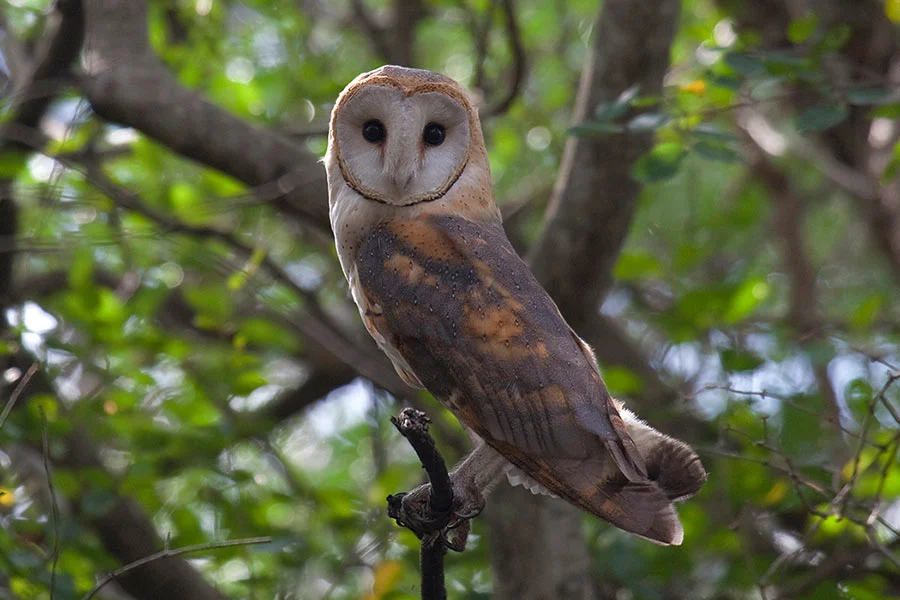
The Barn Owl (Tyto alba) is a widespread and familiar species found across Tanzania in both rural and urban areas. It commonly inhabits buildings, barns, and large trees. Recognizable by its heart-shaped face and pale coloration, it is not threatened globally.
Although its eerie screeching calls have been linked to superstition, it is highly beneficial to humans by controlling rodent populations, especially in agricultural areas.
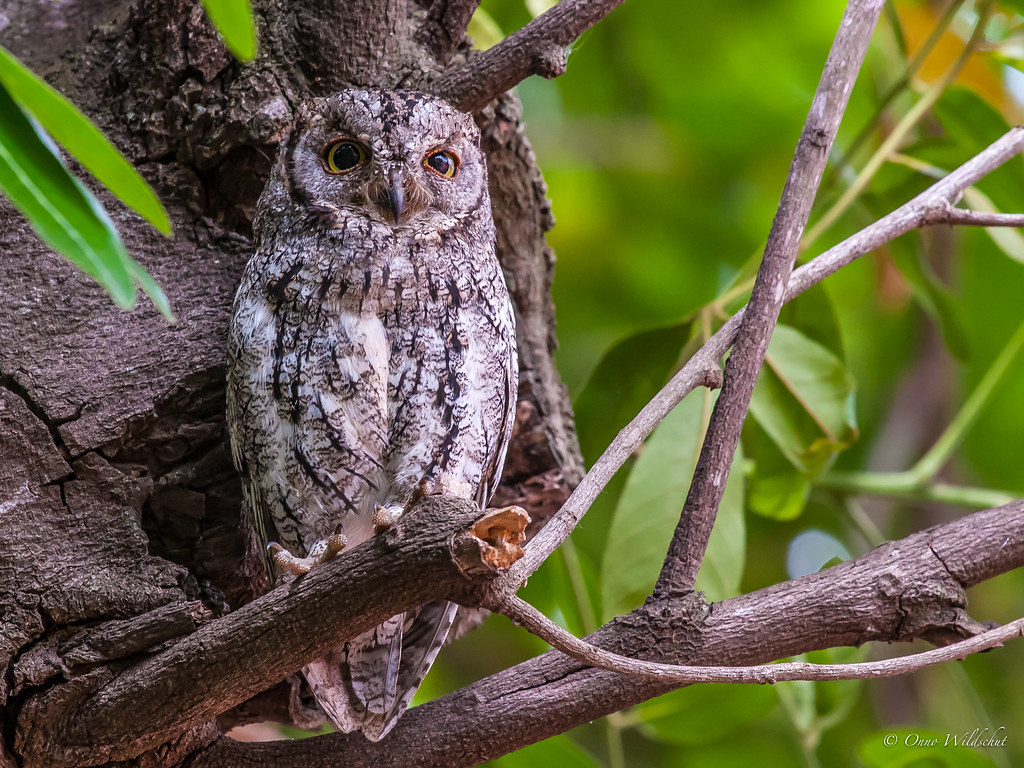
The African Scops Owl (Otus senegalensis) is a small, well-camouflaged owl found in woodlands and savannas. It relies on tree cavities for nesting and blends perfectly with tree bark during the day.
While not currently endangered, habitat loss poses a growing threat. Its soft, repetitive calls are often heard at night, though the bird itself is rarely seen.
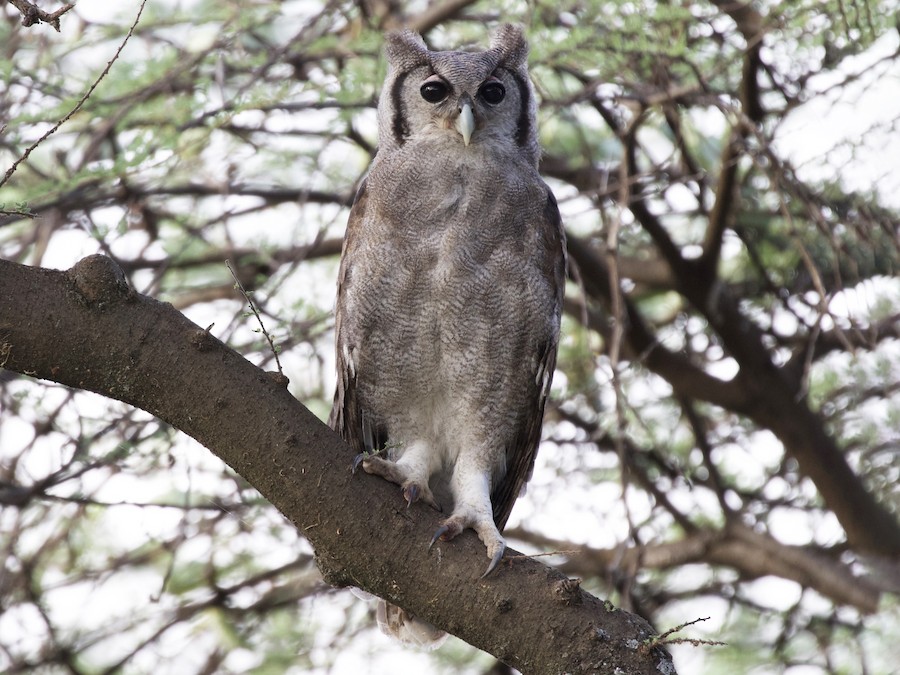
The Verreaux’s Eagle-Owl (Bubo lacteus) is the largest owl in Africa, easily recognized by its massive size and distinctive pink eyelids.
It inhabits woodlands and savannas and is not globally threatened. Its deep, guttural calls are often misunderstood and feared by local communities.
Despite its intimidating presence, it is a vital predator that helps maintain ecological balance.
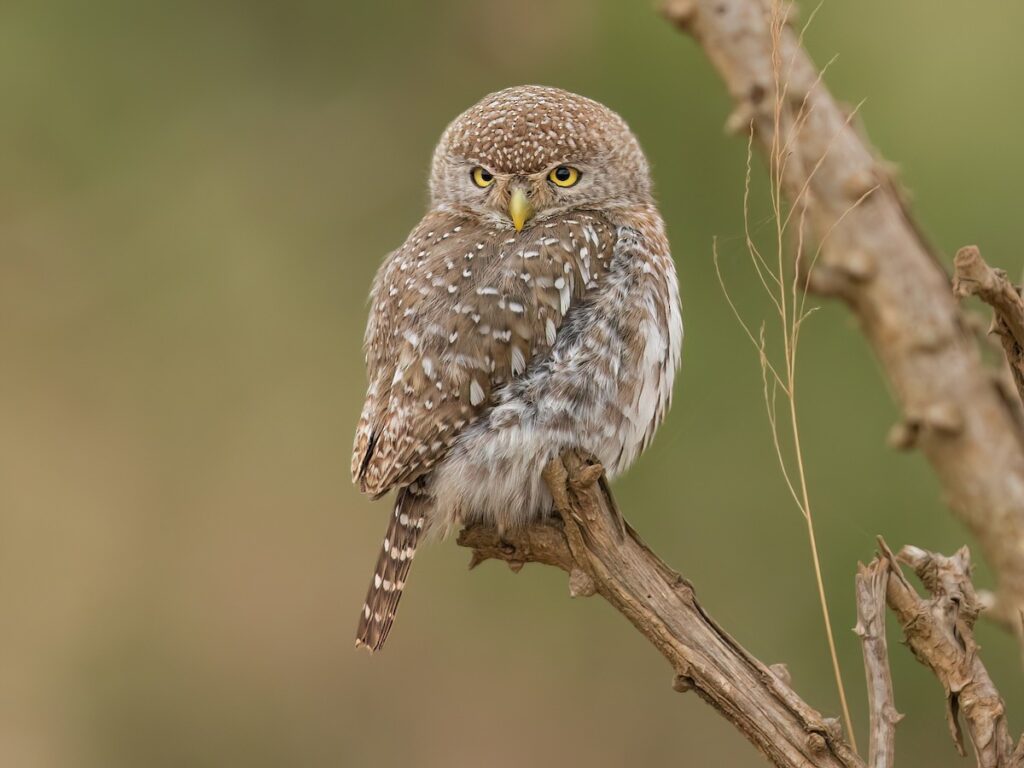
The Pearl-Spotted Owlet (Glaucidium perlatum) is a small, active owl often seen during the day. It is easily identified by the false eye spots on the back of its head, which help deter predators.
Found in woodlands and savannas, it is not threatened and is known for its bold behavior, often mobbing larger birds.
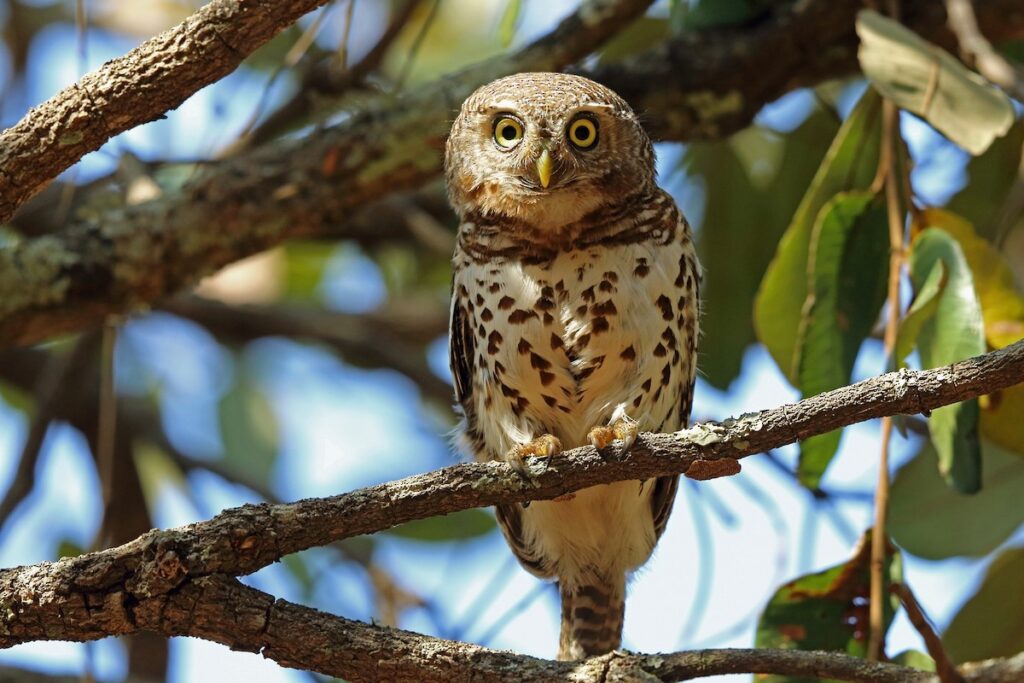
The African Barred Owlet (Glaucidium capense) is a small forest owl found in montane and coastal forests. It is not currently threatened but depends on forest habitats for survival.
It is known for its distinctive calls and active hunting behavior, feeding on insects, small mammals, and birds.
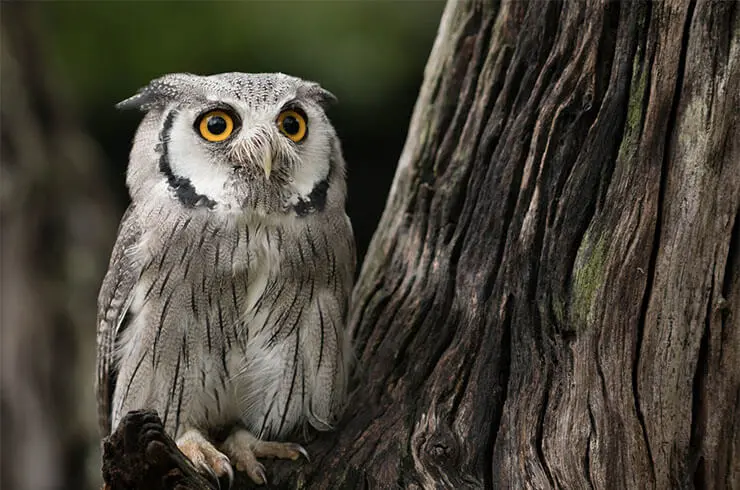
The Southern White-Faced Owl (Ptilopsis granti) is a medium-sized owl found in savannas and open woodlands.
It is famous for its unique defensive behavior, elongating its body to resemble a tree branch when threatened. It is not endangered and feeds mainly on insects and small vertebrates.
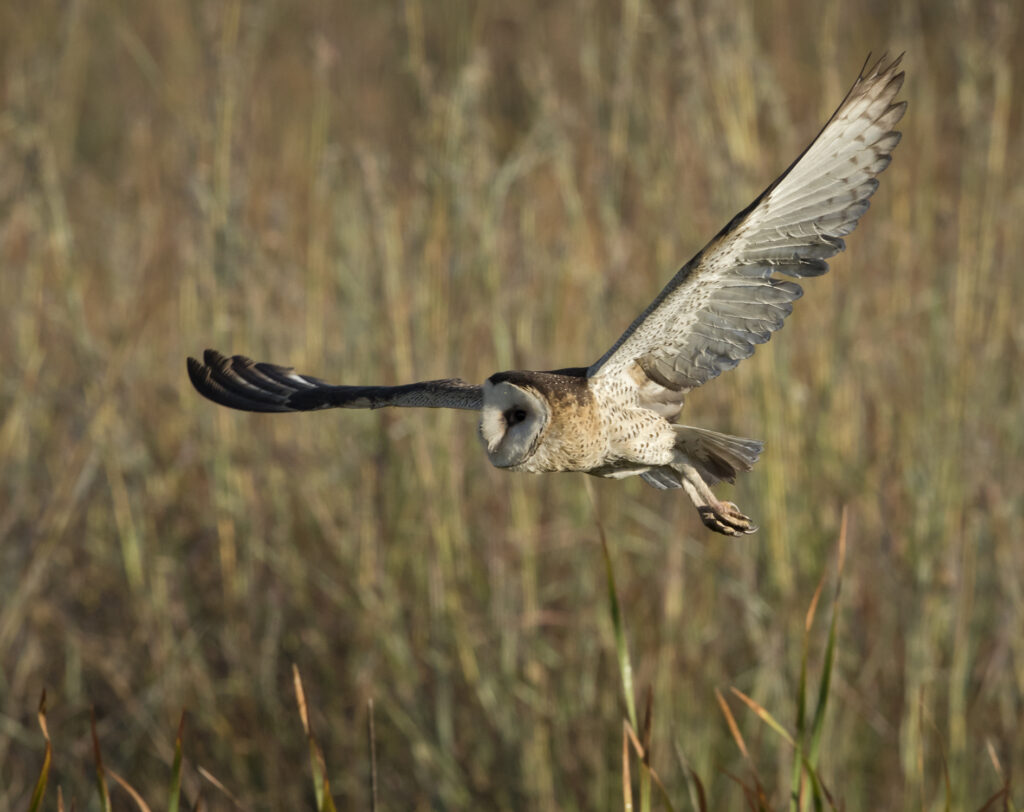
The African Grass-Owl (Tyto capensis) is a secretive species found in grasslands and wetlands. It nests on the ground in dense vegetation and is often overlooked due to its nocturnal and elusive nature.
Although not globally endangered, it is locally threatened by habitat loss, particularly the conversion of grasslands to agriculture.
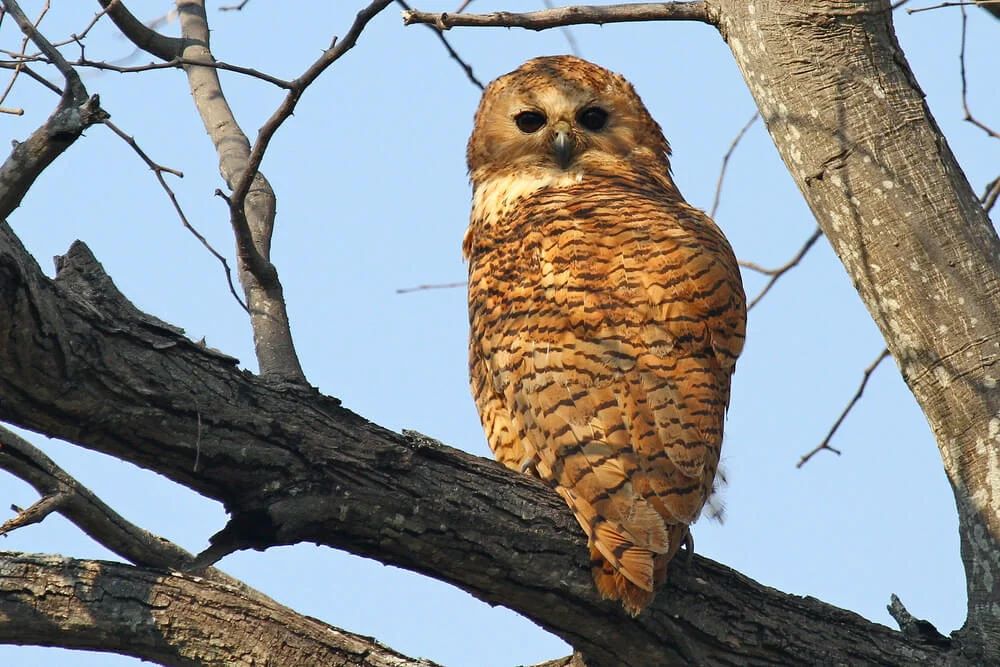
The Pel’s Fishing-Owl (Scotopelia peli) is a large, shy owl associated with rivers, lakes, and forested wetlands. It feeds primarily on fish and is rarely seen due to its secretive behavior.
While not globally threatened, it is vulnerable to habitat disturbance and water pollution.
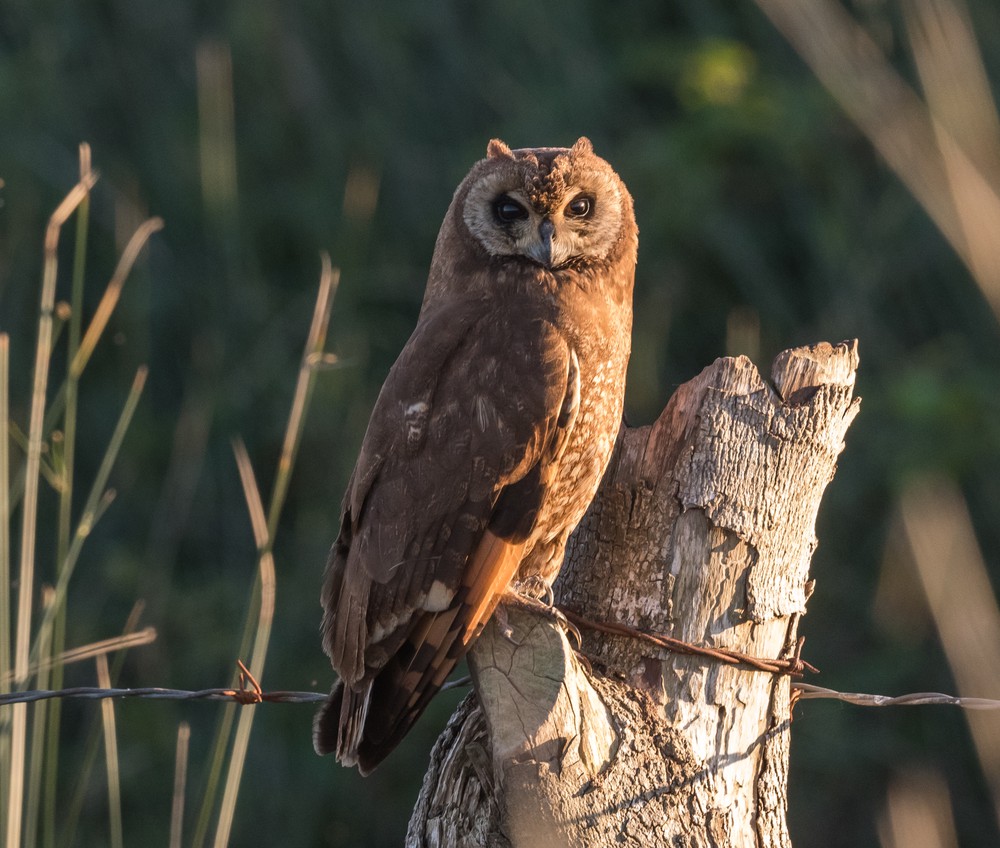
The Marsh Owl (Asio capensis) is a medium-sized owl that inhabits grasslands, wetlands, and open areas. It is often active at dusk and dawn and nests on the ground.
This species is not endangered but is sensitive to habitat destruction and agricultural expansion.
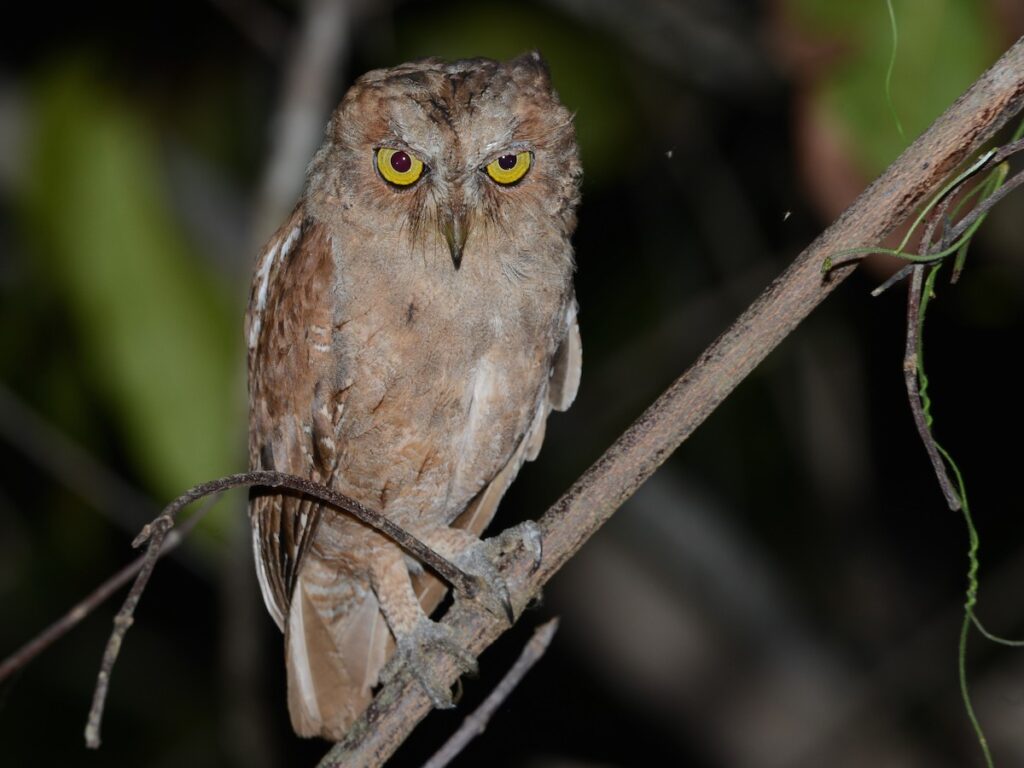
The Pemba Scops Owl (Otus pembaensis) is a small owl endemic to Pemba Island, Tanzania. It lives in forest habitats and is considered Vulnerable due to its restricted range.
Conservation of its forest habitat is essential for its survival, making it an important species for local conservation efforts.

TOCI works to conserve Tanzania’s owl species and their habitats through scientific research, education, and community-based conservation that promotes coexistence between people and wildlife